

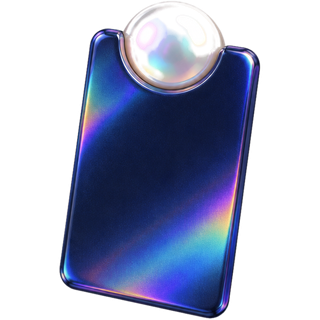
Series 1№ 7/30
AAPL
Apple
- Shares
- 0.005926
- Floor
- 1.99 USDG
- Multiplier
- 1.000000000
- Token
- #1
Robinhood Chain
Ten USDG buys a sealed pack of five numbered certificates. Each one holds a real, redeemable fraction of a listed company. The draw decides which companies and which serial numbers. It never decides how much they are worth.
Four moments, from paying ten USDG to holding the stock itself. Scroll through them.
You pay ten USDG into escrow and get a pack number. The price is the same whatever you draw, and there is no cancel: the print run only means something if nobody can re-roll.
A few seconds later anyone can open the pack. The draw comes from a block that did not exist when you paid, weighted by what is left of each company. Your ten USDG is swapped into five real Stock Tokens, and each one becomes a numbered certificate in your wallet.
A certificate is a plain NFT. Collectors pay for a low serial, a scarce company, or the last piece of a set. Sealing a complete set binds the stock of every company into one piece, worth at least the sum of its parts.
Cancel the certificate and its stock lands in your wallet. No fee, no pause, no deadline, no one to ask. That is the floor, and nothing in the contract stands between you and it.
Robinhood Stock Tokens fold every dividend into an on-chain multiplier. When Apple paid its dividend in August, every AAPL certificate started representing 0.0566 % more shares, without a transaction and without the backing moving. A trading card has never done that.
| Company | Event | Multiplier | Transaction |
|---|---|---|---|
| AAPL | Dividend · 2026-08-14 | 1.000000 → 1.000566 | 0x6d72ca59… |
| NVDA | Dividend · 2026-09-09 | 1.000000 → 1.000775 | 0x4ac23f2e… |
| SGOV | Monthly distribution · 2026-09-01 | 1.002982 → 1.005102 | 0xf33317c3… |
| CRWD | 4-for-1 split · 2026-07-01 | 1.000000 → 4.000000 | 0x07884f2f… |
Not promises. Each one is the absence of a function in the contracts, and each has a test with its name in the security document.
redeem has no pause, no fee, no time limit and no access control beyond owning the certificate.
No owner function can move a token that backs a certificate. The contract's balance equals the sum of every live certificate, exactly, and a 51 200-call invariant holds it there.
Companies, caps and sets are fixed at creation. There is no function to raise a count, add a company, or reopen a sold-out series.
The draw is fixed by a block that does not exist at commit time. No cancel, no second seed, no influence from the buyer, the opener or the order of transactions.
A ten-dollar pack contains ten dollars of stock. The only cost is the swap's slippage, shown before you pay and per certificate after the opening.
The remaining count of every company is on-chain and on the series page. The odds you see at the moment of purchase are the odds you get.
The protocol earns only when certificates change hands, which ties it to the collection staying alive rather than to packs being sold.
A series is a published print run: a fixed list of companies, each with a hard cap on how many certificates will ever exist. When a company runs out it is gone from the pool for good.
Loading series…

Which companies and which numbers is the only thing you do not know yet.